
Digital identity is gradually establishing itself as one of the pillars of digital transformation in Europe. With the eIDAS 2.0 Regulation, the European Union is preparing to roll out the European Digital Identity Wallet (EUDI Wallet), also known as the European digital wallet, which will enable citizens to prove their identity and securely share supporting documents with both public agencies and private companies.
To support this evolution, member states are gradually implementing their own digital identity wallets, in accordance with the framework defined by eIDAS 2.0. In France, this effort is led by France Identité, the official government-backed app, which is currently one of the most advanced projects in preparation for the future European Digital Identity Wallet.
It is in this context that Namirial is contributing to this transformation alongside France Identité, through its participation in European initiatives and various efforts focused on interoperability. This involvement enables concrete preparation for the future uses of the EUDI Wallet in France and helps organizations adapt to upcoming changes.
What is the EUDI Wallet?
The European Digital Identity Wallet, or EUDI Wallet, is a digital wallet that will enable European citizens to securely store, manage, and share their identity data as well as various digital documents.
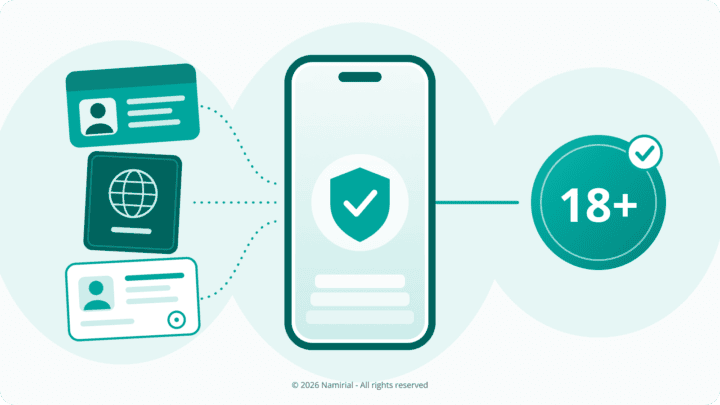
Designed under the eIDAS 2.0 Regulation, it will give users greater control over their personal data. Rather than systematically submitting an entire document, they will be able to choose to share only the information necessary for a specific procedure, with their consent. For example, to prove that a person is of legal age, it will be possible to share an age certificate without having to disclose their date of birth or other non-essential data. The goal is to simplify digital procedures while allowing users to maintain control over their personal data. This will also provide businesses with verified and reliable data, a true guarantee of security.
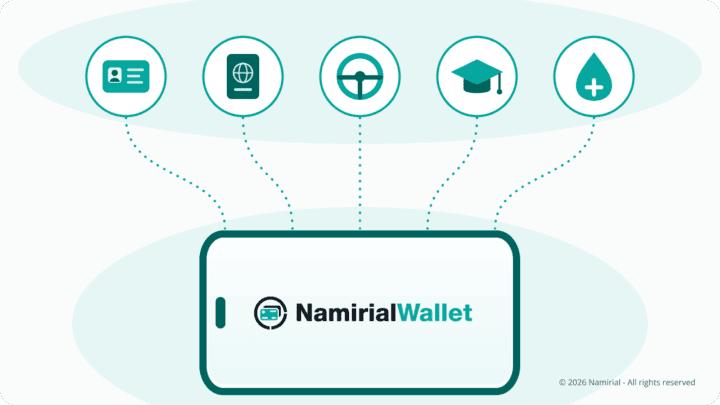
Eventually, the EUDI Wallet will be able to store various types of supporting documents, such as:
- a digital ID;
- a driver’s license;
- diplomas or certifications;
- professional credentials;
- other digitally recognized certificates accepted throughout Europe.
For businesses, this digital wallet will pave the way for simpler and more secure digital processes. In particular, it will facilitate user identification, know-your-customer (KYC) procedures, access to online services, as well as electronic signature and authentication processes.
The goal is to provide a common framework for all Member States so that these transactions can be recognized throughout Europe, regardless of the country of origin of the wallet being used. This implementation is based in particular on the Architecture and Reference Framework (ARF), the architectural reference framework for the EUDI Wallet. The ARF defines a common architecture, specifications, and rules to harmonize the operations of the various stakeholders in the ecosystem. Regularly updated, the ARF has recently evolved with the release of version 3.0.
Why is eIDAS 2.0 a game-changer for European digital identity?
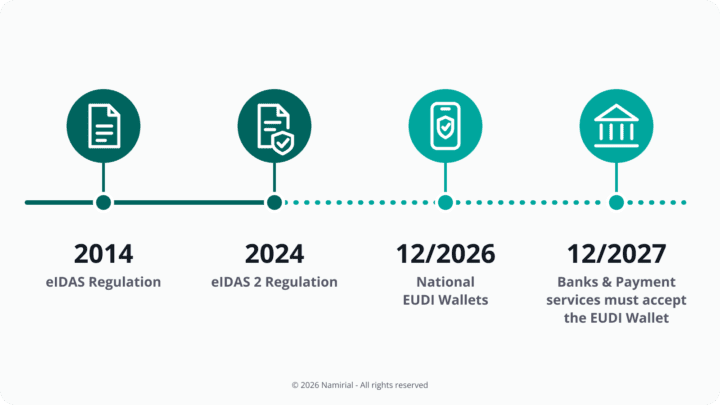
The eIDAS Regulation, adopted in 2014, laid the foundation for digital trust within the European Union. In particular, it establishes a framework for the recognition of electronic identification means as well as trust services, such as electronic signatures, electronic seals, and time stamps.
With eIDAS 2.0, Europe is taking a new step forward by introducing a common framework for the European Digital Identity Wallet (EUDI Wallet) and setting concrete deadlines for its rollout. By December 2026, Member States must make a digital wallet that complies with European requirements available to their citizens.
This development will also have a direct impact on private-sector entities. By the end of 2027, banks and payment service providers must, in particular, be able to accept the EUDI Wallet as a means of identification, whether to access personal accounts or to authorize certain payments.
At the European level, digital wallets from the 27 Member States must be interoperable. In addition to these national solutions, wallets offered by other entities, particularly financial institutions such as major international banks, may also be available. The challenge, therefore, is to enable these different wallets to coexist and interact within a single ecosystem, in accordance with common rules and standards.
In France, this initiative is driven by France Identité, the official government-backed app that is gradually preparing for integration into the future European EUDI Wallet ecosystem.
France Identité: the French digital wallet at the heart of the EUDI Wallet
In France, this initiative is currently based on France Identité. Built on the national electronic ID card (CNIe), the app already supports several uses, such as authentication via FranceConnect or the creation of single-use identity documents.
In its current publicly available version, which does not yet comply with the EUDI Wallet framework France Identité has now issued nearly 5 million digital identities, including 4,958,236 eIDs, representing an 11.4% increase since June 22, 2026. The future EUDI Wallet is expected to be rolled out through an update to the existing app, thereby building on its current infrastructure and user base.
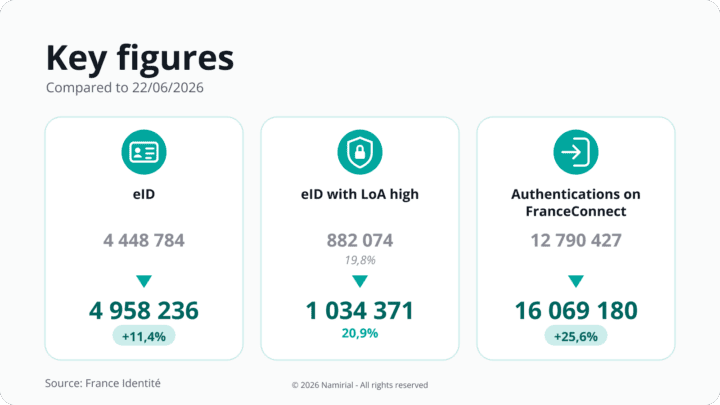
This adoption is also reflected in usage: more than one million digital identities now have a high assurance level (LoA high), representing 20.9% of the eIDs issued, while France Identité has recorded more than 16 million authentications via FranceConnect.
France Identité thus serves as the foundation for future uses of the EUDI Wallet in France. New services will enhance its functionality with the rollout of the European digital identity wallet.
Beyond the app itself, France Identité plays a key role in preparing this ecosystem. Through the France Identité Playground, a public testing environment accompanied by a marketplace, public and private stakeholders can experiment with their solutions, verify their interoperability, and prepare for integration. A beta version of the app is also available upon request.
In particular, this environment allows for testing several use cases related to the verification of digital credentials, including identity data (PID), proof of age, and the Digital Travel Credential (DTC). France Identité is also preparing to launch new credential issuance capabilities, with a registration phase already open for entities wishing to issue credentials.
Namirial has been involved in this initiative for several years. Our group actively participates in major European projects dedicated to the development of the EUDI Wallet, notably the Large Scale Pilots POTENTIAL and APTITUDE, coordinated by France Titres. Through ValidatedID, Namirial also participated in the European Wallet Consortium (EWC), a European project that concluded in 2025. This commitment continues today through Namirial’s participation in WE BUILD, a new European initiative focused on the digital identity wallet ecosystem.
Within the POTENTIAL consortium, Namirial’s teams notably helped develop several use cases, such as opening a bank account and qualified electronic signatures.
Namirial and France Identité: a collaboration in support of the EUDI Wallet
In addition to its involvement in European initiatives, Namirial is collaborating directly with France Identité to ensure the interoperability of future EUDI Wallet use cases in France. As a partner of the France Identité Playground, Namirial also participates in various editions of EUDI Unfold as well as Interop Weeks, where its solutions are tested as a wallet provider, issuer, and verifier of digital documents. This participation continued notably during the Interop Week held from September 21 to 25, 2026.
These tests are already yielding tangible results: Namirial handles the verification of France Identité’s PID credentials and all 14 associated attributes, including the portrait. These trials allow the solutions to be tested with various ecosystem stakeholders and to evaluate their performance under conditions that increasingly mirror real-world use cases.
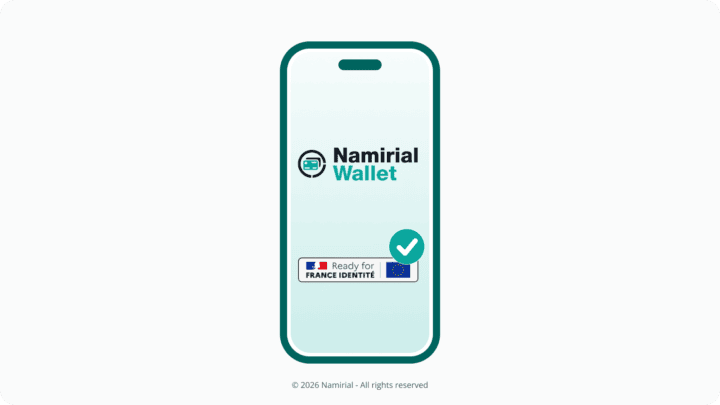
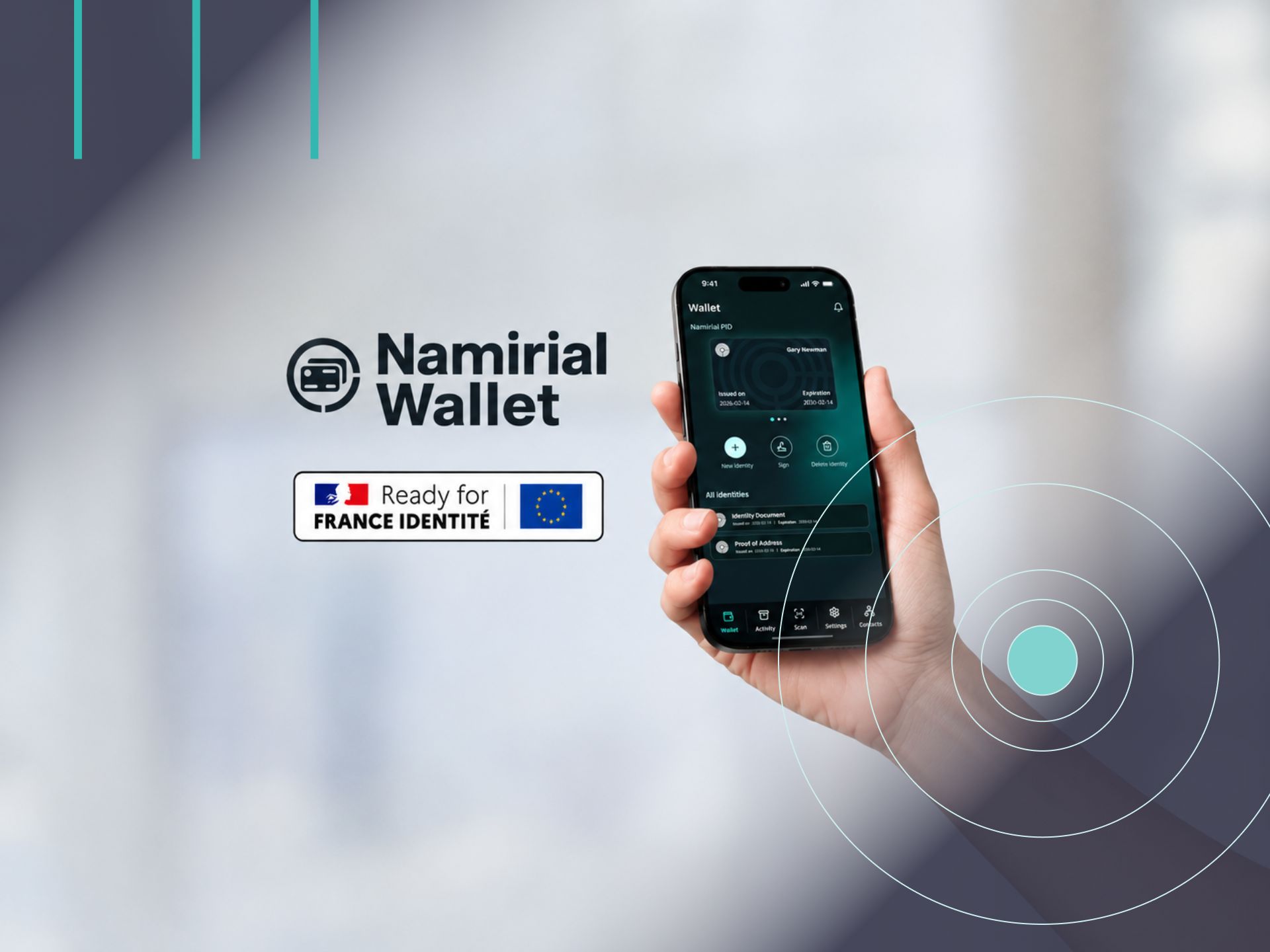
It was also as part of this collaboration that Namirial Wallet earned the “France Identité Ready” badge. This recognition attests to its ability to interact with the France Identité ecosystem as part of the interoperability tests conducted for the future European digital identity wallet.
This interoperability is also reflected in real-world use cases. For example, Namirial Wallet Gateway, which is natively integrated into Namirial Onboarding, allows a user to authenticate using their national wallet directly within an onboarding flow. A demonstration conducted with France Identité and the German digital wallet illustrates the solution’s ability to offer the same onboarding process across different national implementations, without requiring multiple integrations on the enterprise side.
This collaboration thus enables Namirial to contribute to the development of future European standards while preparing its solutions to meet the interoperability requirements of the EUDI Wallet.
While each member state develops its own digital wallet, these different solutions must still be able to communicate with one another. This is precisely what interoperability is all about.
Interoperability: the real challenge for the European wallet
The rollout of the EUDI Wallet does not rely solely on the creation of national digital wallets. The real challenge is to ensure that wallets, document issuers, and online services from different countries and different providers can work together.
Without interoperability, the European digital identity wallet would remain limited to isolated uses. A credential issued in one country might not be recognized elsewhere, or a private service might have to develop specific integrations for each national ecosystem.
The goal of eIDAS 2.0 is precisely to avoid this fragmentation by defining a common framework for the entire ecosystem. But in practice, interoperability does not rely solely on the adoption of common standards. With more than 27 digital wallets set to coexist in Europe, in addition to the various national identifier formats, enabling all of these solutions to communicate and recognize the same information presents a real challenge.
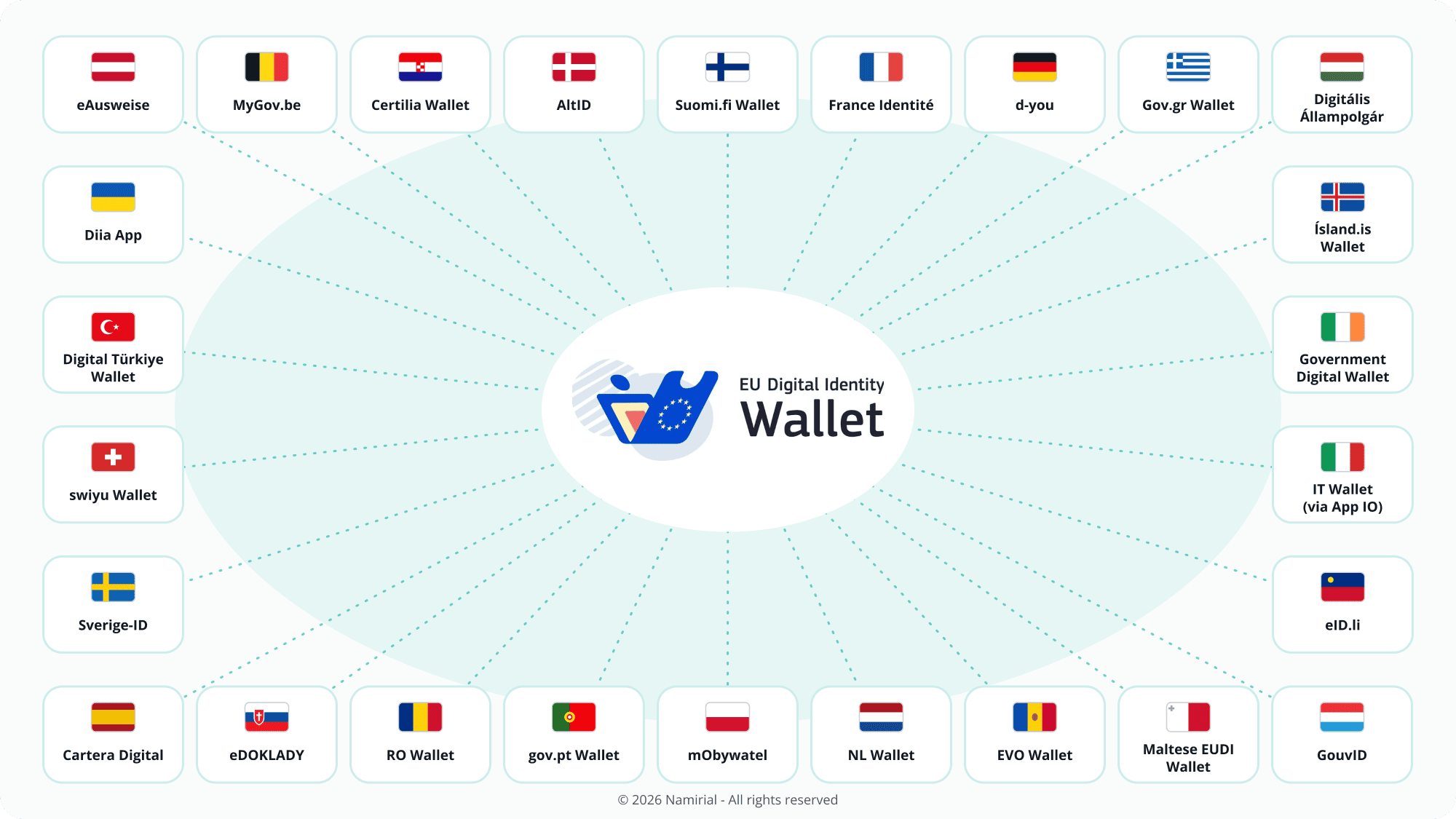
Even when stakeholders rely on the same specifications, differences can arise in their interpretation or implementation. Interoperability must therefore be tested under real-world conditions through regular testing among the various stakeholders in the ecosystem.
It is in this context that the expertise of a pan-European player like Namirial comes into its own. With a presence in several countries and involvement in European initiatives surrounding the EUDI Wallet, Namirial supports organizations in managing this complexity and integrating solutions capable of adapting to different national implementations.
For businesses, this interoperability is essential: it determines the ability to integrate EUDI Wallet-based identification, attribute verification, and electronic signature workflows in the future, without relying on a closed environment or a standalone solution.
How the EUDI Wallet is changing things for organizations
For businesses and government agencies, the arrival of the EUDI Wallet represents more than just a regulatory change. It will also transform the way they design their digital workflows, particularly those involving identification, information verification, or document signing.
Preparing now makes it possible not only to anticipate the requirements of eIDAS 2.0 but also to mitigate the risks associated with integrating future digital identity services. This will enable organizations to build user flows that are compatible with European standards, without having to start from scratch once these services become widespread.
The EUDI Wallet will, in particular, simplify:
- customer onboarding;
- identity verification (KYC);
- professional identity management;
- strong authentication;
- and electronic signatures.
In each of these scenarios, the EUDI Wallet will simplify processes, build trust, and reduce friction for the end user.
The challenge is also to ensure continuity between current practices and future models based on the EUDI Wallet. For organizations, this means not only complying with a new framework but also gradually developing processes that are more secure, more interoperable, and better suited to the expectations of both citizens and customers.
Conclusion
The rollout of the EUDI Wallet marks a new milestone in building a European digital identity ecosystem based on common and interoperable standards. In France, France Identité plays a central role in preparing for this evolution and in testing future use cases.
As this ecosystem takes shape, businesses and government agencies will need to be able to integrate various digital wallets and credentials into their processes. Anticipating these changes today will facilitate the adoption of future use cases while ensuring smoother and more secure experiences.
Through its involvement in European initiatives and its collaboration with France Identité, particularly within the France Identité Playground and interoperability tests. Namirial is helping to prepare for this transition. Earning the “France Identité Ready” badge is part of this effort and concretely demonstrates the ability of its solutions to evolve within the future EUDI Wallet ecosystem.