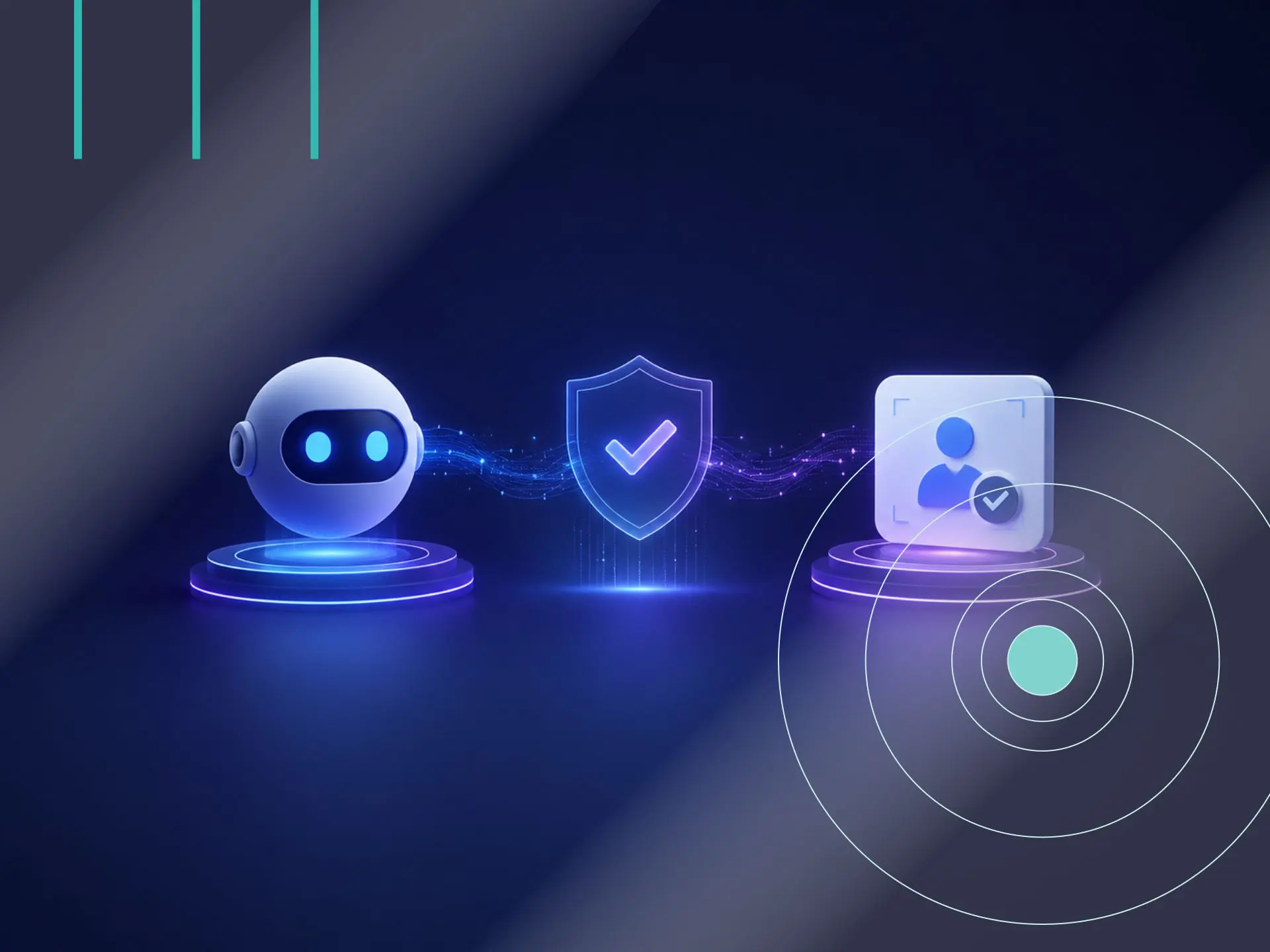

Artificial Intelligence is rapidly moving beyond chatbots and copilots. We are entering the era of AI agents: systems capable not only of answering questions, but of taking actions on behalf of users and organizations.
That shift changes everything.
An AI assistant that schedules meetings or summarizes documents is useful. But an AI system that can onboard a bank customer, verify an identity, trigger an anti-money laundering check, or initiate a qualified signature process enters a completely different category, one that requires governance, compliance, accountability, and trust by design.
This is precisely why we developed the Namirial OnBoarding MCP Connector.
The missing layer between AI and regulated business processes
Today, many organizations are experimenting with AI-powered workflows. But when those workflows interact with regulated domains such as digital identity, KYC, AML, or electronic signatures, companies quickly encounter a major problem:
| AI systems are not inherently designed for regulated environments.
Traditionally, integrating onboarding and identity verification into AI applications required custom API orchestration, complex workflows, security controls, and country-specific compliance logic. Every new AI assistant or agent required a new integration effort.
That model does not scale.
At Namirial, we believe regulated digital trust services should become reusable capabilities that any enterprise AI agent can safely access, without rebuilding governance from scratch every time.
This is where MCP comes in.
What is MCP and why does it matter?
MCP stands for Model Context Protocol, an emerging open standard that allows AI systems to securely connect with external tools, platforms, and enterprise services. You can think of it as a universal interface between AI agents and business applications.
Instead of hardcoding integrations for every assistant, MCP enables organizations to expose capabilities in a standardized way. Any compatible AI client can then securely interact with those services.
For Namirial, this represents a strategic shift.
Rather than treating onboarding, identity verification, AML screening, and digital trust as isolated APIs, we can now expose them as AI-native services that are reusable across different platforms and agent ecosystems. The result is a far more scalable and future-proof architecture.
Bringing trusted identity into the AI era
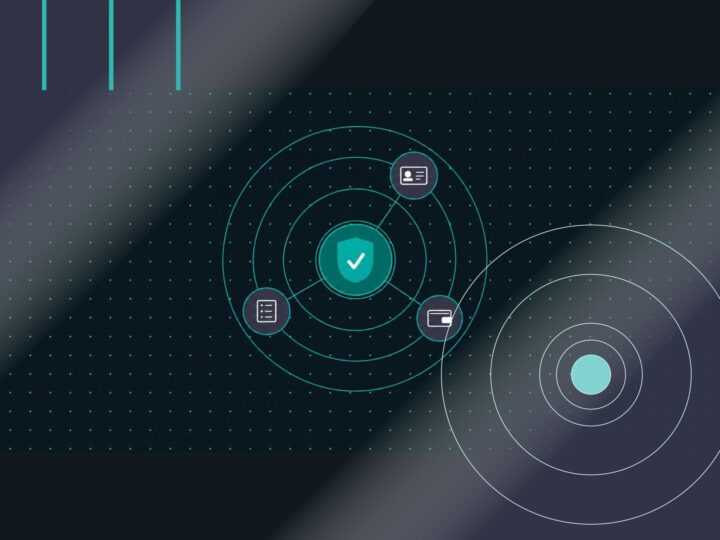
The Namirial MCP Connector allows AI agents to interact with the Namirial OnBoarding platform using natural language workflows while maintaining the same compliance, security, and governance standards our customers already rely on.
This means an AI agent can:
- initiate a customer onboarding process,
- generate a verification session,
- trigger identity verification and AML checks,
- retrieve onboarding results,
- manage electronic signatures,
- and maintain a complete audit trail of every AI-driven action.
All while respecting jurisdiction-specific regulations, tenant permissions, and enterprise security policies. Importantly, the AI system never bypasses governance controls.
Every action remains subject to:
- authentication through My Namirial,
- role-based authorization,
- tenant isolation,
- regulatory configuration,
- and immutable audit logging.
In other words: AI automation without compromising trust.
Why this matters for businesses
Many discussions around AI focus on productivity gains. Those are important, but for regulated industries the real opportunity is much larger.
The ability to embed trusted digital identity services directly into AI workflows unlocks entirely new operating models.
- Banks can accelerate onboarding processes.
- Insurance providers can automate customer verification journeys.
- Telecom operators can streamline SIM activation.
- Public administrations can simplify citizen interactions.
- Enterprise platforms can integrate identity-aware AI assistants without reengineering compliance controls.
And perhaps most importantly, organizations can do this while remaining aligned with evolving European regulations such as:
- eIDAS,
- AMLR,
- and the EU AI Act.
This is critical because AI adoption in regulated sectors will not be driven by experimentation alone. It will be driven by trust, accountability, and governance.
AI governance cannot be an afterthought
One aspect I consider particularly important is auditability. As AI systems become more autonomous, organizations must be able to explain:
- what the AI system did,
- why it did it,
- which model generated the action,
- and which human identity authorized it.
This is no longer optional.
The Namirial MCP Connector was designed with this principle from the beginning. Every AI-driven interaction can be logged with tamper-evident audit trails, including conversation context, timestamps, model metadata, and resulting actions.
This creates an auditable chain of responsibility aligned with the direction Europe is taking on AI governance. In practice, this means companies can innovate with AI while maintaining the accountability standards required in regulated environments.
An open architecture for the future
Another key decision we made was to build on open standards rather than proprietary ecosystems. The connector is not tied to a single AI vendor or assistant. It can work with:
- enterprise AI assistants,
- internal copilots,
- IDE agents,
- orchestration frameworks,
- and future AI platforms that support MCP.
This openness matters because the AI landscape is evolving extremely quickly.
Organizations need flexibility.
They should not have to redesign their trust infrastructure every time a new AI framework emerges. Our goal is to make Namirial’s trust services interoperable, portable, and ready for the next generation of AI-driven enterprise systems.
From APIs to AI-native trust services
For years, digital transformation focused on APIs. Now we are entering a new phase where AI agents become active participants in enterprise workflows.
In this context, APIs alone are no longer sufficient. Systems must become understandable and actionable for AI. This is the deeper significance of MCP. It transforms enterprise capabilities into AI-native services that agents can reason about, orchestrate, and execute safely.
At Namirial, we see this as a natural evolution of digital trust infrastructure. Identity, onboarding, signatures, and compliance controls should not sit outside AI systems. They should become embedded, governed capabilities within them.
The road ahead
We are still at the beginning of the AI agent era, but one thing is already clear: organizations will increasingly need trusted bridges between AI autonomy and regulated business operations.
The companies that succeed will not simply deploy more AI. They will build AI systems that are secure, accountable, interoperable, and compliant by design.
That is exactly the direction we are pursuing at Namirial. The MCP Connector is one step toward that future.
RELATED CONTENT
INNOVATION
Why AI Agents need a trust layer, and why it can’t be an afterthought
Something fundamental is shifting in how businesses operate. AI agents are no…

TRUST
Knock, knock. Who’s there? A new trust layer. Onboarding and AI agents
Two things have made me stop and think over the past few months…