

The European Digital Identity Wallet (EUDIW) is no longer just a regulatory ambition; it has become a tangible infrastructure. However, as we move from legislative drafts to real-world deployment, a critical reality has emerged: compliance with standards is only the starting point, not the final outcome.
At Namirial, we view interoperability not as a checkbox, but as a continuous engineering discipline. Recent testing cycles have proven that while the specifications provide the map, navigating the actual terrain requires significant effort, dedicated expertise, and a managed platform approach.
The Reality of the Field: Lessons from Interoperability Testing
If there is one area where the gap between theory and practice becomes immediately visible, it is interoperability testing. Large-scale European initiatives have clearly demonstrated that real-world implementations rarely behave exactly as defined on paper. Even when actors adhere to the same specifications, differences emerge in how standards are interpreted, how optional parameters are handled, and how edge cases are managed.
These are not marginal issues. they directly impact whether two systems can successfully exchange and validate credentials in a cross-border scenario. Key challenges include:
- Interpretation Variability: Different implementations interpret specifications in slightly different ways.
- Configuration Complexity: Optional parameters and protocol extensions introduce variability that can break “compliant” systems.
- Scale Challenges: Edge cases often only emerge when systems interact at scale in a multi-actor environment.
Interoperability, therefore, is not achieved by simply implementing a specification. It is validated through continuous testing, iteration, and alignment across multiple actors. Namirial’s performance in these events underscores the difference that a managed, enterprise-focused approach makes:
- EUDIW Unfold Interop Week (March 2026): Organized by France Identité, this event saw Namirial achieve an 84% success rate across 63 executed tests.
- CSC Interoperability: In Bucharest, we successfully tested the CSC API v2.2 at scale, a vital step for sectors requiring high-assurance digital signatures.
Navigating the Mosaic: A Pan-European Support Strategy
The challenge of interoperability is compounded by the fragmented readiness of the European market. As of February 2026, the status of EUDI Wallet deployment is a “mosaic” across Member States:
- Leading Regions: Countries like Italy and France have established projects with public sandboxes ready for testing.
- Developing Tracks: A significant portion of Europe has announced projects but lacks public sandboxes or is still in the “repo available” stage.
- Upgrade Tracks: Nations such as Germany and Spain are focused on upgrading existing identity applications.
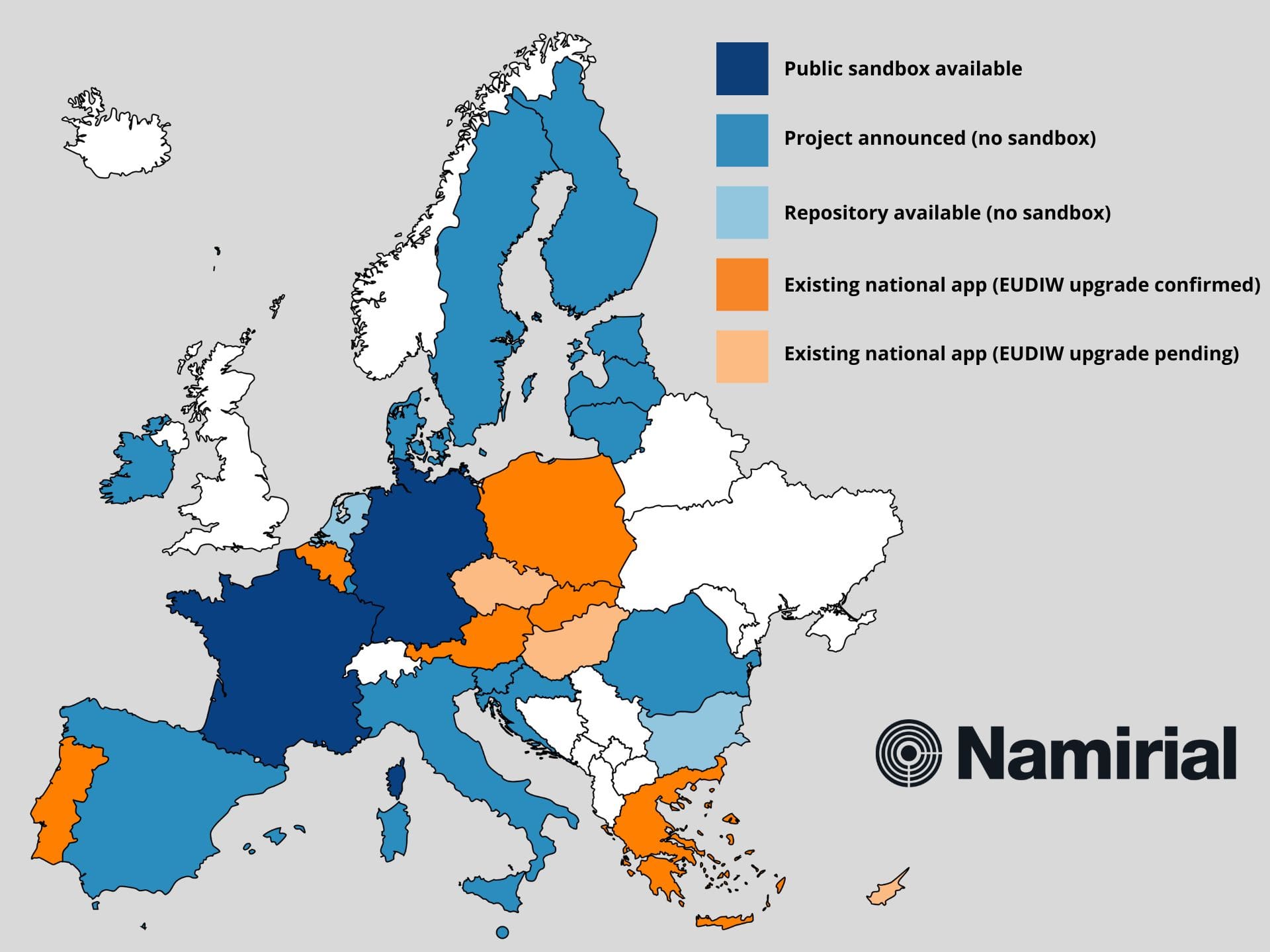
For organizations operating across borders, this fragmentation is a major hurdle. A pan-European group like Namirial, with a direct presence in many of these countries, acts as a bridge. We harmonize these different national tracks into a single strategy, ensuring our customers are ready for every implementation choice across the continent.
The Enterprise vs. Open-Source Divide: Choosing Long-Term Viability
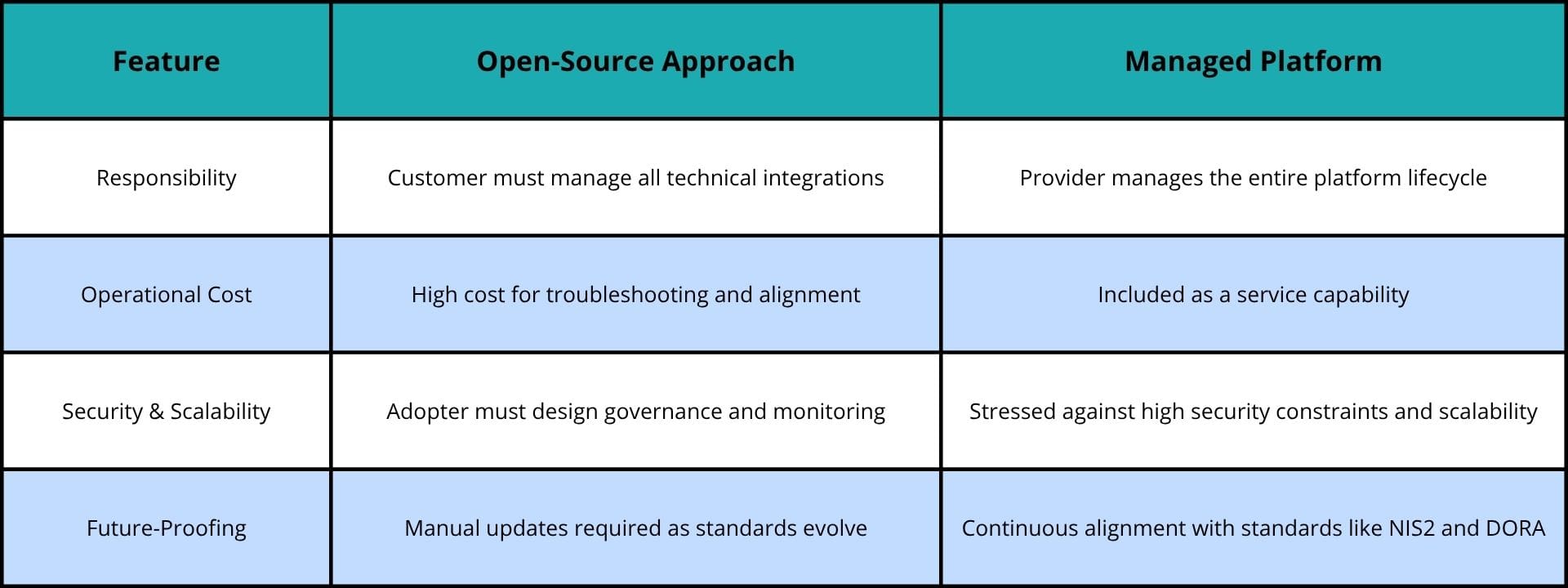
When evaluating the infrastructure for the EUDI Wallet ecosystem, organizations must choose between two fundamentally different architectural paths: a managed enterprise-grade platform or an open-source middleware approach. While open-source components offer valuable building blocks at the protocol level, they focus primarily on technical “protocol enablement” rather than the broader operational framework required for high-assurance environments.
The True Cost of “Out-of-the-Box” Middleware
Open-source solutions often appear cost-effective at the software level, but they introduce significant “hidden cost layers” that can impact long-term Total Cost of Ownership (TCO):
- Engineering Overhead: The responsibility for designing, implementing, and managing the entire system architecture lies entirely with the adopting organization.
- Operational Burden: Maintaining scalability and change management requires a dedicated internal team rather than being delivered as a service.
- Compliance Risk: Without built-in governance, customers must custom-build their own compliance controls to meet strict regulatory requirements.
- Bridging the Security Gap: A major differentiator lies in security architecture; while enterprise-grade platforms are built upon consolidated, certified cryptographic infrastructure and maintained via continuous SIEM monitoring and rigorous vulnerability testing, those adopting open-source alternatives are responsible for constructing and defending their own security framework from the ground up.
Interoperability as an Ongoing Commitment
In summary, the journey toward a functional EUDI Wallet ecosystem highlights three critical pillars: the necessity of rigorous, real-world testing to bridge the gap between theory and practice, the need to navigate a fragmented European “mosaic” of readiness, and the strategic choice between resource-intensive open-source middleware versus a resilient enterprise platform.
It is vital to understand that interoperability is not a one-time achievement; it is a moving target. As upcoming regulations such as NIS2 and DORA introduce stricter requirements for digital resilience and security, the landscape will continue to shift. Maintaining a compliant and functional system requires constant alignment with evolving standards and the proactive management of emerging edge cases. Choosing a managed enterprise solution ensures that this technical and regulatory burden is handled by experts, allowing your organization to remain focused on its core mission while staying permanently “ready” for the future of European identity.