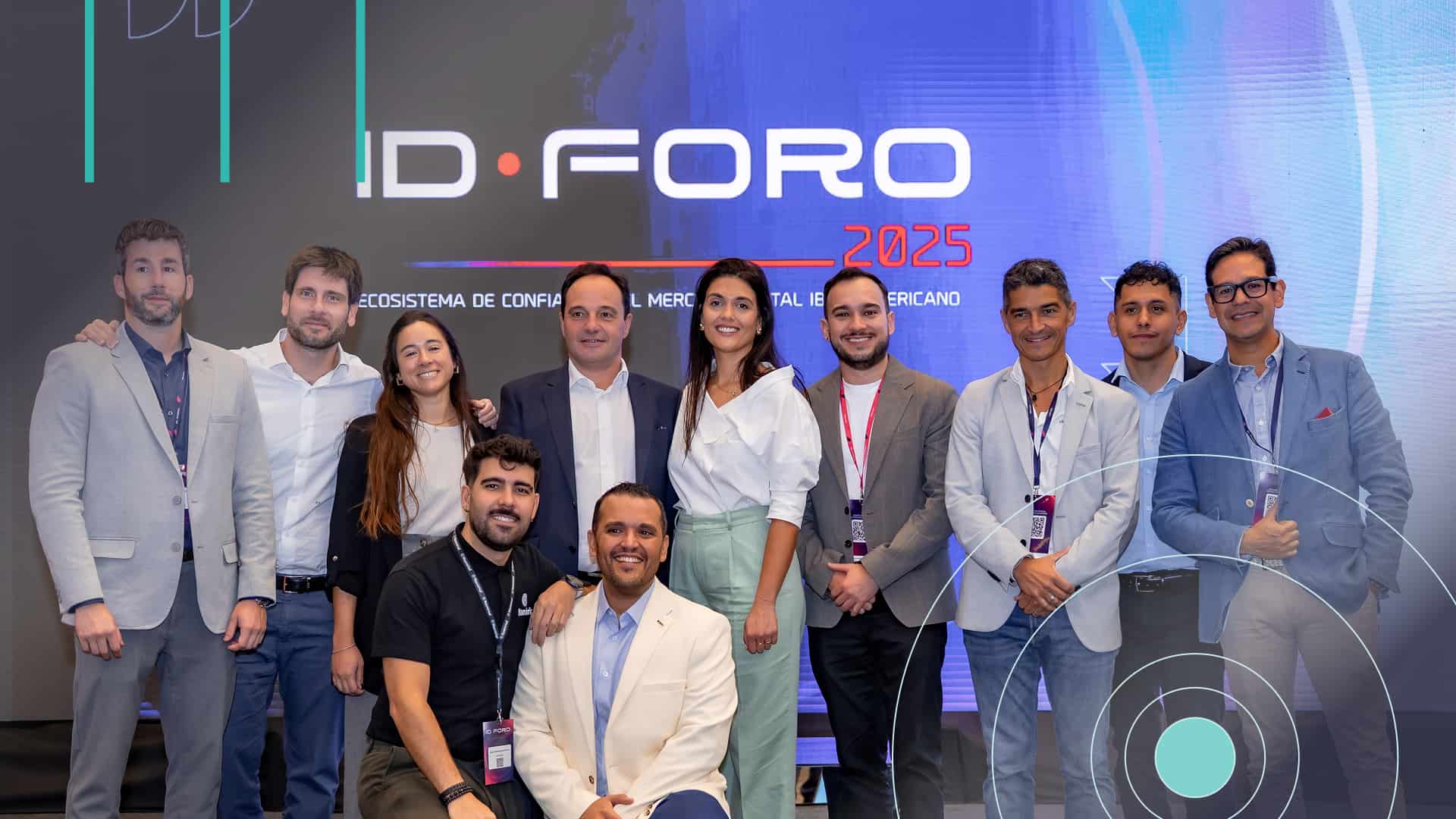

The 7th Ibero-American IDForo Summit, held in Asunción (Paraguay) from 24 to 26 November 2025, took place at a moment in which digitalisation has become decisive for development and societies increasingly demand services that are efficient, secure, and accessible. Digital identity, trust infrastructures and regional cooperation thus emerge as strategic pillars. Over three days, representatives from governments, the financial sector, multilateral organisations, technology companies, academia and business leaders reached a shared conclusion: Ibero-America faces a historic opportunity to position itself as a strong, competitive and integrated digital bloc.
DPI: The strategic architecture for digital development
One of the central themes of the summit was the role of Digital Public Infrastructure (DPI) as an essential architecture for any modern digital economy. DPI goes beyond technology: it reflects a structural vision that requires a common, trusted and shared infrastructure for digital services to function effectively.
DPI is built on three fundamental pillars:
- Reliable digital identity
- Accessible and secure digital payments
- Data interoperability between public and private actors
These components enable fluid, secure and traceable interactions among citizens, businesses and public administrations. Their strength determines the efficiency, security and scalability of a digital economy.
International organisations recommend DPI as a guiding framework because it helps avoid duplication, strengthens resilience against cyber threats, reduces structural costs and accelerates the delivery of public and private services. Within this model, digital identity becomes the connective element across the ecosystem, enabling a cross-cutting environment of trust.
For Latin America, DPI represents a strategic opportunity: modernising digital infrastructure, fostering inclusion, boosting competitiveness and advancing toward interoperable, cross-border services. It also requires progress in governance, sustainability, common standards and —as highlighted in Asunción— active private-sector participation to ensure technical capacity, scalability and real adoption.
Digital identity as critical infrastructure
The summit reinforced a defining idea: digital identity can no longer be viewed as an accessory, but as critical national infrastructure. In a world where digital interactions are now the norm, the ability to verify identities securely is essential for stability, competitiveness and public safety.
Digital identity enables core activities: banking, government procedures, healthcare, education and mobility. It is both a pillar of the digital economy and an enabler of citizen well-being.
Countries with mature digital identity ecosystems demonstrate clear benefits:
- System integrity: reduced fraud and stronger security in key interactions.
- State capability: more efficient, transparent and data-driven public administrations.
- Market confidence: regulatory predictability that fosters investment and innovation.
Those countries that adopt strategic digital identity infrastructures will be better positioned to compete globally.
Towards an Ibero-American digital trust ecosystem
Beyond national progress, the summit emphasised the need for a shared regional vision. Ibero-America has the opportunity to build a digital trust ecosystem that connects countries, facilitates cross-border commerce and reduces regulatory fragmentation.
Digital trust becomes a competitive advantage that supports economic integration and the cross-border deployment of services and business models.
This vision also fosters the internationalisation of the private sector, which can leverage standardised, reusable processes for onboarding, payments, electronic signatures, regulatory compliance and credential verification. Sectors with the greatest potential impact include:
- Banking and fintech: regional digital products based on mutually recognised identity schemes.
- Insurance: digital operations and claims built on shared processes that reduce costs and simplify experiences.
- Telecommunications and digital service providers: essential players enabling identity, connectivity and trust services at scale.
- Universities and the education sector: interoperable credentials that facilitate recognition of qualifications and mobility.
The summit made clear that Ibero-America has shared challenges, common opportunities and sufficient institutional capacity to move towards a coordinated digital market based on trust.
The rise of DTM: efficiency, transparency and resilience
In a context where organisations must optimise processes, strengthen governance and ensure operational continuity, Digital Transaction Management (DTM) emerges as a strategic enabler.
DTM manages the full lifecycle of any digital transaction with complete traceability. Beyond digitising isolated steps, it reshapes critical processes and creates more robust and auditable workflows.
The benefits for senior leadership appear in three dimensions:
- Business speed: shorter cycle times, greater agility and faster go-to-market.
- Governance and control: enhanced oversight, continuous auditing and more effective risk management.
- Resilience and continuity: remote and distributed operations without loss of control, evidence or service quality.
In Latin America, many organisations have advanced in partial digitisation, but true transformation will come from orchestrated, automated end-to-end processes. The message from Asunción was clear: DTM will be a key lever for efficiency, transparency and competitiveness in the coming years.
Harmonisation in LATAM: Europe as a reference for new opportunities
A strong consensus at the summit was the recognition of Europe’s leadership in digital identity, trust services and advanced regulatory frameworks. The eIDAS model and its evolution into eIDAS2 offer a proven example of interoperability, legal certainty and multinational collaboration.
Europe also shows that a cohesive digital market is possible, with clear rules and shared tools such as the EUDI Wallet. For Ibero-America, where regulatory fragmentation hinders integration, this is especially relevant.
The relationship is reinforced by strong economic ties:
- Europe is the largest investor in Latin America, with around €785 billion.
- And the region’s third-largest trading partner, with nearly €285 billion in exchanges of goods and services.
Europe also exerts global regulatory influence through the “Brussels Effect”, visible first with the GDPR and now with digital identity and trust services.
Adopting international standards aligned with eIDAS2 would allow Latin American countries to:
- Strengthen legal certainty, offering greater predictability.
- Align digital services with international reference standards, building a more trustworthy and scalable environment.
- Connect their economies with global trust ecosystems, facilitating investment, cooperation and new business models.
Against this backdrop, the summit put forward the vision of an Ibero-American Digital Market, inspired by the European Digital Single Market. Economic complementarity and historical ties make this a realistic opportunity to deepen trade, investment and digital value chains.
Economic and social impact of a trust ecosystem
Digital identity and trust services not only enhance administrative efficiency; they also have a direct impact on people’s lives and national competitiveness.
A trust ecosystem generates tangible benefits:
- Greater access and fewer barriers for citizens and businesses connecting to financial, healthcare, educational and public services.
- A more supportive environment for entrepreneurship, through simpler procedures and predictable regulatory conditions.
- Increased institutional trust, through secure, coherent and understandable digital services.
As the digital economy advances, trust becomes indispensable for cohesion and progress. It enables more inclusive growth and more effective state modernisation.
A decisive moment for Ibero-America
The summit left a shared conviction: Ibero-America is ready for a qualitative leap. The region has talent, innovation, vision and a growing agreement on the importance of digital trust as a foundation for development.
If countries consolidate robust infrastructures, coherent regulatory frameworks and a coordinated regional perspective, they can position themselves as a relevant bloc in the global digital economy. The challenge is significant, but the opportunity is historic.
The 7th IDForo Summit showed that this path is not only necessary but achievable — and that the region is ready to move towards a digital trust ecosystem that drives growth, inclusion and competitiveness.